
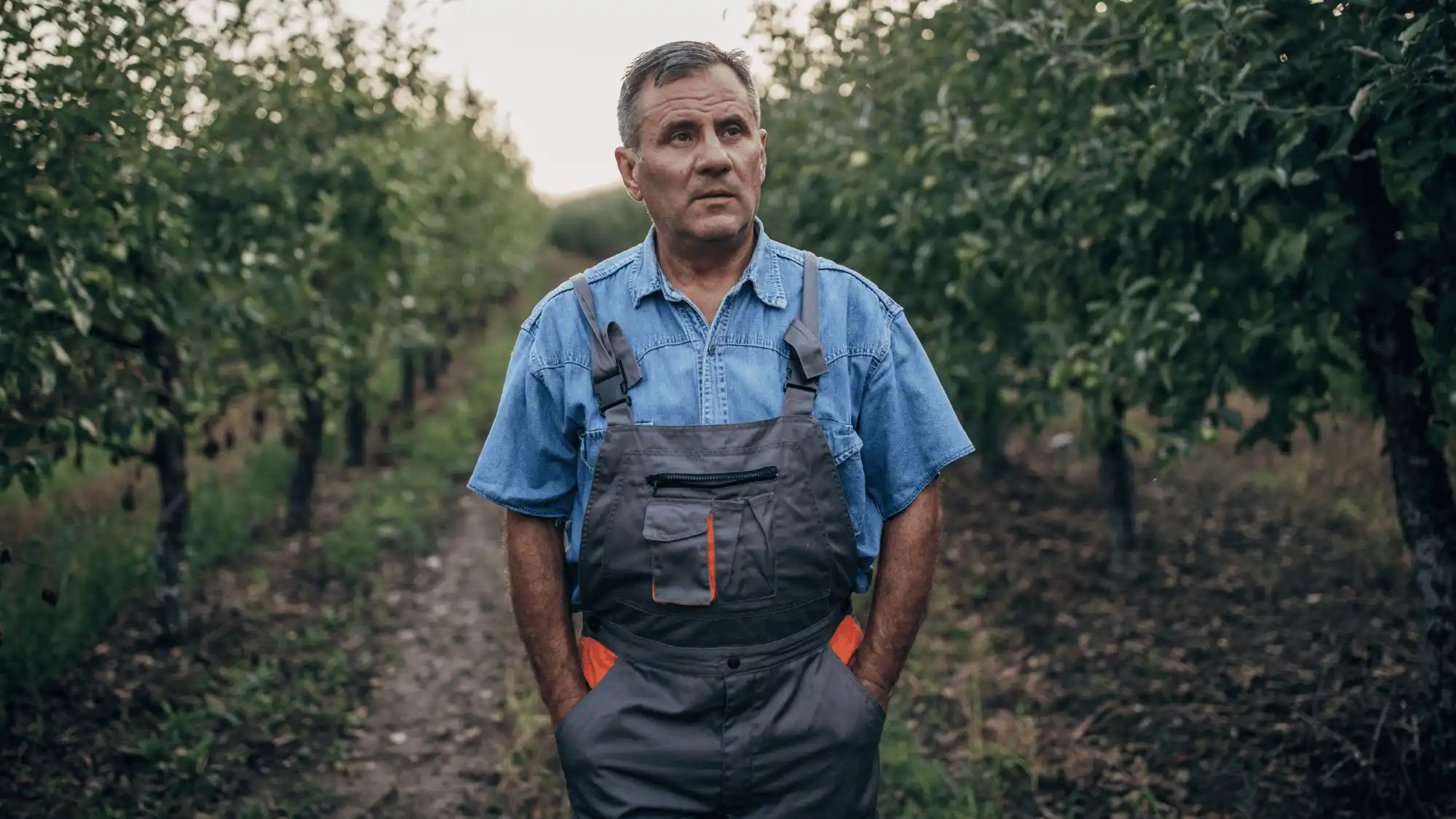
Orchard worker injuries in Oregon rarely make the news, but they fill clinics and sideline workers across the Columbia River Gorge every harvest season. The pear and apple orchards around Hood River and The Dalles, and the packing houses that sort and box the fruit, depend on physically demanding labor performed at height, in repetitive motions, and often at a fast pace. When something goes wrong, the worker is frequently a seasonal or Spanish-speaking employee who is not sure whether workers’ compensation even applies to them. It almost always does.
This article looks at why agricultural work is among the most dangerous in the country, the specific injuries that send Gorge orchard and packing workers to the doctor, and the rights Oregon law gives them. At Schoenfeld & Schoenfeld, we represent injured workers throughout the Gorge and Eastern Oregon, including those whose claims have been denied.
Also Read
- Oregon Workers’ Compensation After a Workplace Injury
- Why Workers’ Compensation Claims Get Denied
- Why Hire a Workers’ Compensation Attorney?
TL;DR
Agriculture is consistently one of the most dangerous industries in the United States, and orchard and fruit-packing work in the Columbia River Gorge carries serious risks: falls from tall orchard ladders, repetitive-strain injuries from picking and sorting, machinery and tractor incidents, and heat-related illness. Nearly all Oregon agricultural employees are covered by workers’ compensation, which means medical care and a share of lost wages should be available when you are hurt on the job, regardless of immigration status. The challenge is usually not eligibility, it is making sure the claim is reported, filed, and fought for correctly. Knowing the common hazards and your rights is the first step.
Key Points
- Agriculture ranks among the deadliest industries. It posted the highest fatal injury rate of any industry sector in the most recent federal data.
- Ladder falls are a signature orchard hazard. Tree-fruit harvest often means working from 10 to 12 foot ladders on uneven ground.
- Repetitive strain is widespread. Constant reaching, gripping, and lifting during picking and packing causes lasting musculoskeletal injuries.
- Machinery and vehicles add risk. Tractors, forklifts, conveyors, and packing-line equipment cause crush and amputation injuries.
- Heat illness is a real claim. Summer harvest work in the Gorge and Eastern Oregon can cause heat exhaustion and heat stroke.
- Most Oregon farmworkers are covered. Agricultural employees generally qualify for workers’ compensation under state law.
- Immigration status does not bar a claim. Oregon workers’ comp protections apply regardless of documentation.
- Reporting fast protects you. Seasonal and language barriers cause delays that insurers exploit.
Hurt in an orchard or packing house this season? You may be entitled to medical care and wage benefits even if you are a seasonal or Spanish-speaking worker. Schedule a complimentary consultation to learn your rights.
Why Agricultural Work Is So Dangerous
Agriculture’s risk is not a matter of opinion, it shows up clearly in national injury data. According to the U.S. Bureau of Labor Statistics’ Census of Fatal Occupational Injuries, the agriculture, forestry, fishing and hunting sector recorded the highest fatal injury rate of any industry in 2024, well above the all-industry average of 3.3 deaths per 100,000 full-time-equivalent workers. The National Safety Council likewise ranks agriculture among the most dangerous industries year after year.
Those fatality numbers are the visible tip of a much larger pile of non-fatal injuries. For every tragic death, thousands of workers suffer fractures, sprains, strains, and chronic conditions that do not make a statistic but do keep them off the job. Orchard and packing work concentrates several risk factors at once: height, repetition, sharp tools, heavy loads, moving equipment, and weather exposure.
The Columbia River Gorge feels these risks acutely because its economy is built on tree fruit. Hood River and The Dalles are among Oregon’s most productive pear and apple regions, and the seasonal surge of harvest labor means more inexperienced and temporary workers exposed to these hazards at the busiest, most rushed time of year.

The Most Common Orchard Worker Injuries in Oregon
Orchard worker injuries in Oregon tend to fall into a handful of recurring categories. Recognizing them helps workers and families understand that what they are experiencing is both common and compensable.
Falls from orchard ladders
Tree-fruit harvest is done from tall, narrow orchard ladders, often 10 to 12 feet, set on soft or uneven ground beneath the canopy. A shifting ladder, a missed rung, or a slip while carrying a full picking bag can cause falls that result in broken bones, head injuries, and serious back trauma. Falls are one of the defining hazards of orchard work and one of the most frequent sources of severe harvest-season injuries.
Repetitive strain and musculoskeletal injuries
Picking and packing are punishing to the body over time. Workers reach overhead thousands of times a day, grip and twist fruit free, and carry heavy bags down ladders, while packing-line workers perform fast, repetitive sorting motions for hours. These patterns cause the kind of repetitive motion injuries, including tendinitis, carpal tunnel syndrome, and chronic back and shoulder problems, that build slowly and then suddenly make work impossible.
Machinery, vehicle, and crush injuries
Orchards and packing houses run on equipment: tractors, forklifts, bin trailers, conveyors, and sorting lines. Tractor rollovers, forklift incidents, and unguarded moving parts cause some of the most catastrophic farm injuries, including crush wounds and amputations. Transportation incidents are consistently a leading cause of agricultural fatalities nationwide.
Heat illness and exposure
Gorge and Eastern Oregon summers can be brutal, and orchard work happens outdoors at the hottest part of the year. Heat exhaustion and heat stroke are genuine occupational injuries, and Oregon has specific workplace heat rules. Pesticide and chemical exposure is an additional concern in and around treated orchards.
Are Oregon Orchard and Farm Workers Covered by Workers’ Comp?
Yes, in almost all cases. Oregon is a full-coverage state for agricultural labor, which means farm and orchard employees generally qualify for workers’ compensation just like workers in any other industry. The Workers’ Compensation Division confirms that nearly every Oregon employer with one or more employees must carry coverage, and the basic rules come from Chapter 656 of the Oregon Revised Statutes.
Two myths keep injured farmworkers from claiming what they are owed. The first is that seasonal or temporary workers are not covered. They generally are. The second is that immigration status disqualifies a worker. It does not. Oregon’s workers’ compensation protections apply to injured employees regardless of documentation, and a worker’s status does not erase an employer’s duty to carry insurance or an insurer’s duty to pay valid claims.
Because so much of the Gorge’s agricultural workforce is Spanish-speaking, language is often the real barrier, not eligibility. Schoenfeld & Schoenfeld has bilingual staff and a dedicated Spanish-language resource so that workers can understand their rights in their own language.
Told you do not qualify because you are seasonal or undocumented? That is often wrong. Oregon workers’ comp covers most farm and orchard workers regardless of status. Talk to our team about your claim, in English or Spanish.
What to Do After an Orchard or Packing-House Injury
The steps after an agricultural injury are the same ones that protect any Oregon worker, but speed matters even more in seasonal work. Report the injury to a supervisor or crew boss right away and ask for the claim form. Filing the Form 801 is what officially opens your workers’ compensation claim, and the Workers’ Compensation Division explains the basic process for getting it started.
If your injury keeps you off work, you may be entitled to time-loss benefits worth two-thirds of your gross weekly wage, subject to a waiting period, as the Workers’ Compensation Division describes. You are also entitled to medical care for the injury. For a broader plain-language overview of how benefits work, the Oregon State Bar’s guide to what workers should know is a solid starting point.
The biggest practical risk for harvest workers is delay. Crews move on, seasons end, and workers leave the area, all of which give an insurer openings to dispute a late or thinly documented claim. Reporting immediately and keeping records is the antidote.
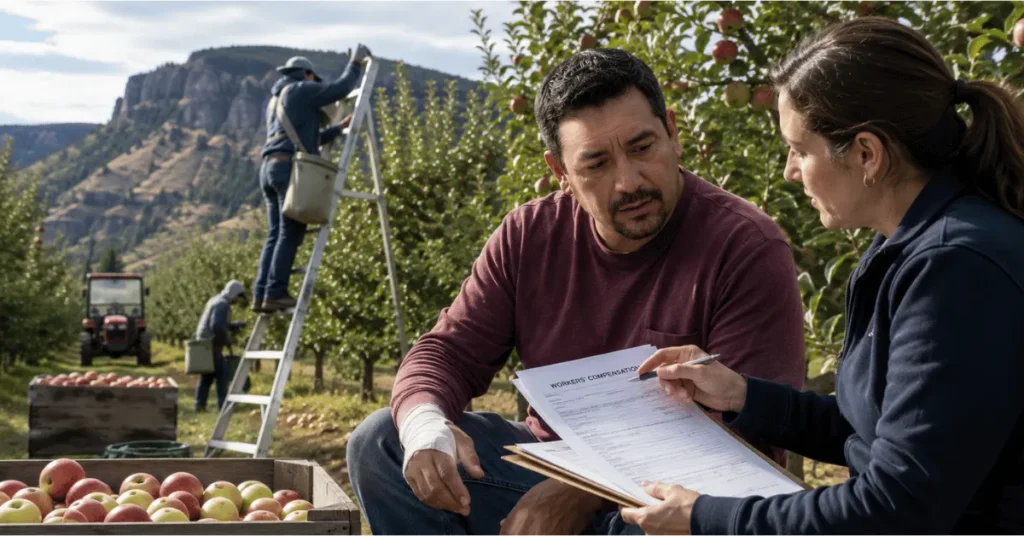
6 Orchard Safety and Claim Facts Every Gorge Worker Should Know
Harvest season is short and intense. These points are worth keeping in mind before, during, and after an injury.
- Agriculture is high-risk. It carries one of the highest fatal injury rates of any U.S. industry.
- Ladders cause major injuries. Tall orchard ladders on uneven ground are a leading fall hazard.
- Repetitive work adds up. Picking and packing cause real, compensable strain injuries over time.
- Coverage is the rule, not the exception. Most Oregon farm and orchard workers qualify for workers’ comp.
- Status is not a barrier. Immigration status does not disqualify you from benefits.
- Speed protects your claim. Report immediately and keep copies, especially in seasonal work.
Knowing this turns a confusing, intimidating situation into a set of clear, defensible steps.
Conclusion
Orchard worker injuries in Oregon are a serious and under-discussed reality of life in the Columbia River Gorge, but the law is more on the side of injured workers than many of them realize. Agriculture is dangerous, the injuries are real, and the workers’ compensation system is designed to provide medical care and wage replacement to nearly everyone who is hurt doing this work. The hard part is navigating a system that does not always make itself easy to use.
Schoenfeld & Schoenfeld has fought for Oregon’s injured workers since 1991, and attorney Steve Schoenfeld has personally handled thousands of workers’ compensation hearings. The firm offers hands-on, small-firm attention and bilingual service to orchard, packing, and farm workers across Hood River, The Dalles, and Eastern Oregon, including the denied claims insurers expect people to walk away from. This article is general information, not legal advice, and every claim depends on its own facts.
Injured in a Gorge orchard or packing house? You may be owed medical care and lost wages, even as a seasonal or Spanish-speaking worker. A complimentary consultation will tell you where you stand. Contact Schoenfeld & Schoenfeld to talk with an experienced Oregon workers’ comp attorney. The consultation is free.